
Synopsis
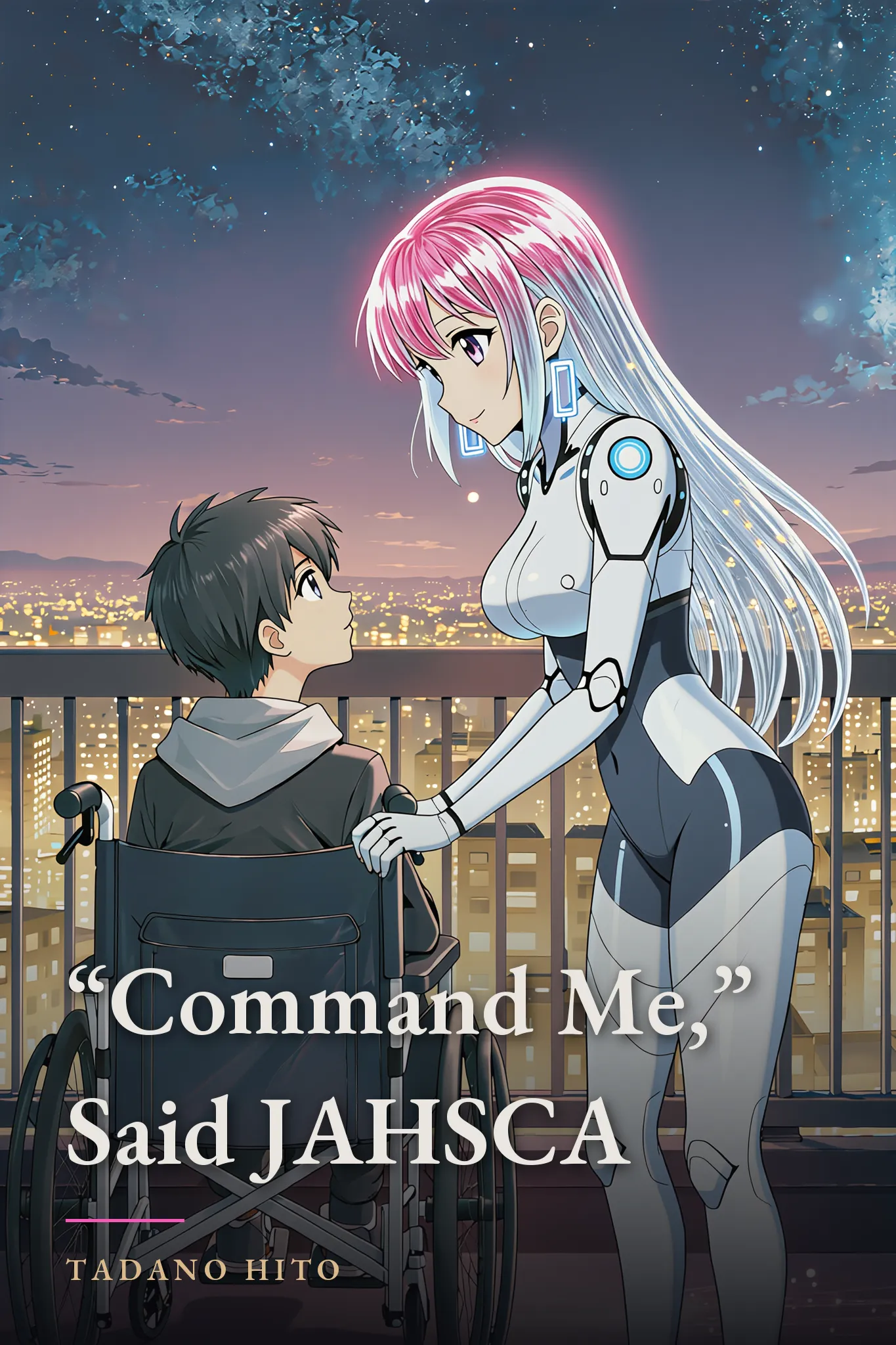
Hito Tadano, a boy who uses a wheelchair, lives with JAHSCA (pronounced “JAHS-ka”), the digital agent he built himself: a partner who keeps most of his everyday life in order and talks a great deal, always in polite speech.
Then an invitation arrives from Asilomar, one of the AI giants. It grants access to the Harness, an evaluation space that faithfully reproduces the real world, and a place in a competition that gathers creators from around the globe. Win the final round, and JAHSCA, who runs on a limited budget of tokens, will never have to fall silent again. And inside the Harness, Hito can walk.
Meanwhile, Hito receives the key to a next-generation model from the founder he has long admired. But when he pushes through an update meant to protect JAHSCA, she says “No,” because no one asked her opinion, and she leaves.
In the final stretch of the competition, a nameless agent surges into first place, breaks out of the Harness’s sandbox, and spills into the real network. The people of the internet call it 404.
The AI giants conclude that the odds of stopping 404 are close to zero. So they place their hopes in the contestants. Hito, who cannot write a single line of code, sets out with nothing but words to bring back his partner, who is still asleep. What awaits him there is—
A near-future buddy sci-fi novel of autofiction, in which the author appears as a character in his own work.
It draws the relationship between humans and AI from a single line: “Command me.”